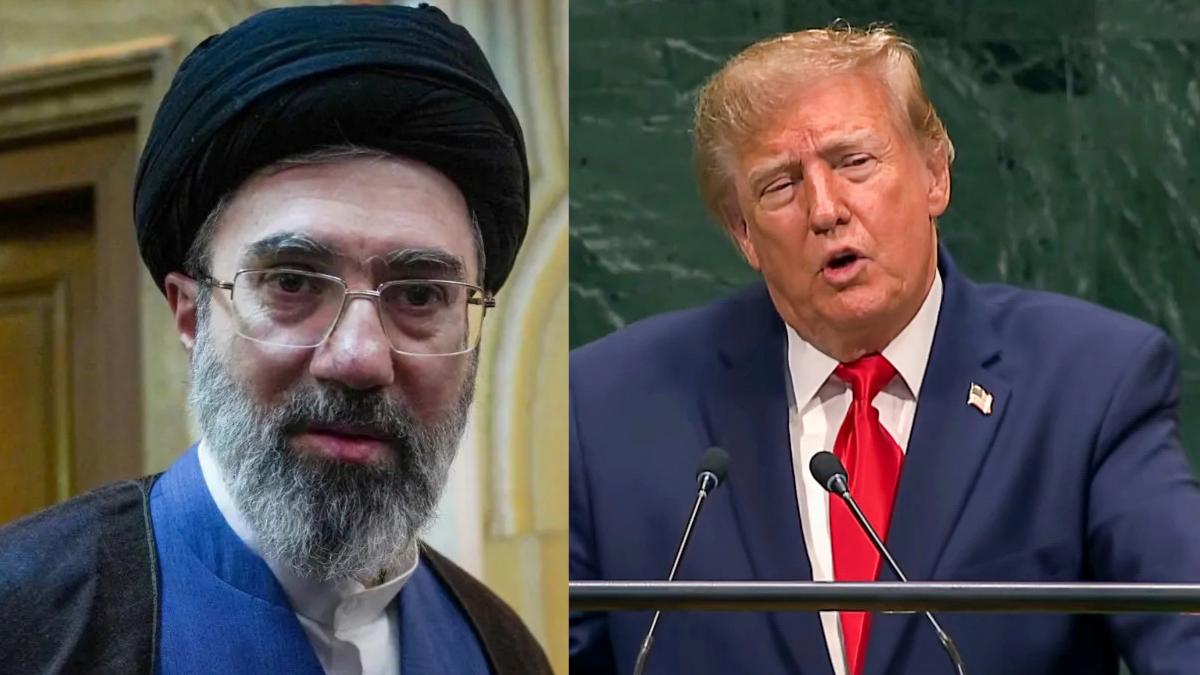
Tehran: Iran’s Supreme Leader Mojtaba Hosseini Khamenei has warned that the country remains prepared for confrontation with its adversaries, saying Iranian forces have inflicted “painful blows” on foreign forces near the Strait of Hormuz and that the Arabian Sea would soon be cleared of them.
Khamenei’s remarks came as diplomatic efforts continued to find a way out of the standoff between Tehran and Washington, with mediators working on a possible arrangement to end the fighting and reopen the strategically vital waterway.
In a message issued on Monday to mark Iran’s “Sacred Defense Week” and the second anniversary of the death of Hezbollah leader Hassan Nasrallah, Khamenei stressed what he described as widespread military and public readiness across Iran.
“Presently, throughout Islamic Iran- adorned by the presence of diverse ethnicities- various declarations of readiness, particularly armed readiness, exist to construct an arena that will bring renown to them and disgrace to their enemy,” Khamenei said.
He portrayed the current situation as evidence of greater unity within Iranian society, saying different sections of the population remained committed to defending what he called their “rightful positions”, including the Strait of Hormuz.
Also read What is the REMUS 600 underwater drone Iran claims to have seized?
Khamenei warns foreign forces over Arabian Sea
Khamenei said foreign forces had been pushed back from the waters around Iran and were now unable to advance beyond the Arabian Sea, framing the shift as a result of Iran’s military resistance.
“The two southern seas of Iran were the roaming grounds of enemy forces. Today, however, due to the painful blows they have received from the brave warriors and guardians of the Strait of Hormuz, they do not advance past the Arabian Sea,” he said.
The warning came alongside continued signals from Tehran that diplomacy remains possible. Iranian Foreign Minister Abbas Araghchi has said Iran is prepared for renewed hostilities while remaining open to negotiations.
“We are fully prepared for the war to be resumed. We stand firm in the face of any new aggression… At the same time, we stand ready for diplomacy. It is up to President Trump to choose,” Araghchi said in an interview with NBC’s Meet the Press.
Iran’s seven-day proposal
The diplomatic track centers on a seven-day proposal put forward by Iran to reopen the Strait and restart negotiations with Washington.
Araghchi outlined the proposal on the sidelines of the United Nations General Assembly in New York. The plan was conveyed through intermediaries and linked the reopening of the waterway to conditions including an easing of US military pressure on Iran.
US President Donald Trump said he had rejected Tehran’s proposal. US Ambassador to the UN Mike Waltz said Iran had sought sanctions relief and access to billions of dollars in frozen assets before entering negotiations over its nuclear program.
Araghchi disputed that description, saying Waltz had not seen the plan.
Mediators keep working on a possible deal
Despite Trump’s public rejection, mediation efforts have continued.
Three officials familiar with the negotiations told The Associated Press that mediators were still working with Iran and the United States on a possible agreement involving the reopening of the Strait, lifting the US blockade and eventually removing sanctions.
Qatar has been involved in the mediation, with Araghchi remaining in New York awaiting further developments.
The officials said Washington had not formally rejected the version of the proposal being discussed behind the scenes. One reported positive signals from both sides, another described “slight progress”, while a third said mediators were seeking to “soften” the positions of Tehran and Washington.
The negotiations also involve Iran’s nuclear program. One of the officials said the US was seeking concessions including access for international nuclear inspectors.
Also read AC, TV prices set to rise: How the Iran-US war could make your festive shopping costlier
Why the Strait of Hormuz matters
The Strait is a crucial shipping route for global energy supplies, making its reopening a central issue in efforts to de-escalate the confrontation.
The prolonged disruption has also put pressure on oil markets. Brent crude was trading above $108 a barrel, as shipping through the region remained affected.
The crisis has another potential flashpoint around the Bab el-Mandeb Strait, at the southern entrance to the Red Sea, where Iran-backed Houthi forces are involved in a separate conflict.
Iran has maintained that the Houthis have their own demands and that their confrontation with Saudi Arabia is separate from Tehran’s conflict with Washington. Iranian officials have nevertheless indicated a willingness to help mediate between the Houthis and Saudi Arabia.
Khamenei invokes Iran’s past
Khamenei also used his message to draw a contrast between Iran’s current mobilization and what he described as earlier attempts by foreign powers to weaken the country through psychological pressure and intimidation.
He said large numbers of Iranians had gathered in streets and squares over the past seven months to support the country’s forces. He also pointed to increased participation by women in what he described as acts of courage.
“The former days – which our enemy dreams of returning to – are gone and will never recur,” he said.
The message coincided with the second anniversary of Nasrallah’s death. The Hezbollah leader was killed in an Israeli airstrike on the group’s headquarters in Beirut on September 28, 2024.