Supreme Court Again Rejects Trump-Backed Missouri Congressional Map/ TezzBuzz/ WASHINGTON/ J. Mansour/ The U.S. Supreme Court again declined to allow Missouri to use a Trump-backed congressional map in the November midterm elections. The decision leaves a Missouri Supreme Court order requiring officials to use the state’s 2022 districts in place. The dispute has created uncertainty because Missouri used the newer, Republican-backed map during its August primary.
Quick Look
- The U.S. Supreme Court rejected another emergency request involving Missouri’s newer congressional map.
- No justice publicly dissented, and the brief order offered no legal reasoning.
- Missouri’s highest court says the 2022 congressional districts must be used in November.
- Secretary of State Denny Hoskins had directed election officials to follow the newer map after a conflicting federal court order.
- The Missouri Supreme Court held a hearing on whether Hoskins should be held in contempt.
- The newer map was designed to improve Republicans’ chances of winning seven of Missouri’s eight House seats.
- Voters will decide the map’s future through Proposition A in November.
Deep Look
Supreme Court leaves state ruling in place
The U.S. Supreme Court again rejected an effort to use Missouri’s Trump-backed congressional map in the November midterm elections, dealing a setback to Republicans seeking to protect their narrow House majority.
The unsigned emergency order did not explain the justices’ reasoning, and no justice publicly dissented. The action leaves intact a Missouri Supreme Court judgment stating that congressional districts adopted in 2022 remain effective for the general election.
The decision did not constitute a full ruling on the merits of the broader redistricting dispute. Instead, it rejected an emergency request to change which map will govern the approaching election.
Conflicting court orders create uncertainty
The dispute became more complicated after a federal judge issued a temporary order directing Missouri officials not to use any map other than the newer districts established through House Bill 1.
Republican Secretary of State Denny Hoskins cited that federal order when he instructed local election authorities to prepare for the general election using the new map. The Missouri Supreme Court, however, had already directed him to use the districts adopted following the 2020 census.
During a contempt hearing Thursday, state Supreme Court judges repeatedly pressed an attorney representing Hoskins about whether the secretary would immediately issue new guidance requiring election officials to use the 2022 districts.
“We’re in a precarious situation,” Chief Justice W. Brent Powell said.
The court did not immediately decide whether to hold Hoskins in contempt. Missouri Deputy Solicitor General William Seidleck told the judges that Hoskins was considering his next steps.
Primary and general elections could use different districts
The Supreme Court’s decision likely means Missouri will conduct its November general election under a different congressional map from the one used during the August primary.
As a result, some voters could find themselves in different districts and may be unable to vote for the same congressional candidate they supported in the primary. Republican state officials argued that changing districts between the two elections could violate voters’ federal rights and disrupt election administration.
Hoskins previously said retaining the House Bill 1 map would ensure that candidates nominated in August competed in the same districts during the general election.
New map targeted a Democratic-held seat
Missouri became the second Republican-led state, after Texas, to approve a mid-decade congressional redraw after President Donald Trump urged Republican officials to seek additional House seats before the midterm elections.
The revised Missouri map reshaped the Kansas City-area district represented by Democratic Rep. Emanuel Cleaver. It removed portions of the existing district and extended the remaining territory into more Republican-leaning rural areas.
The partisan objective was to improve Republicans’ prospects of winning seven of Missouri’s eight congressional seats, one more than under the previous configuration. That political objective is separate from the courts’ legal findings about whether the newer districts took effect under Missouri law.
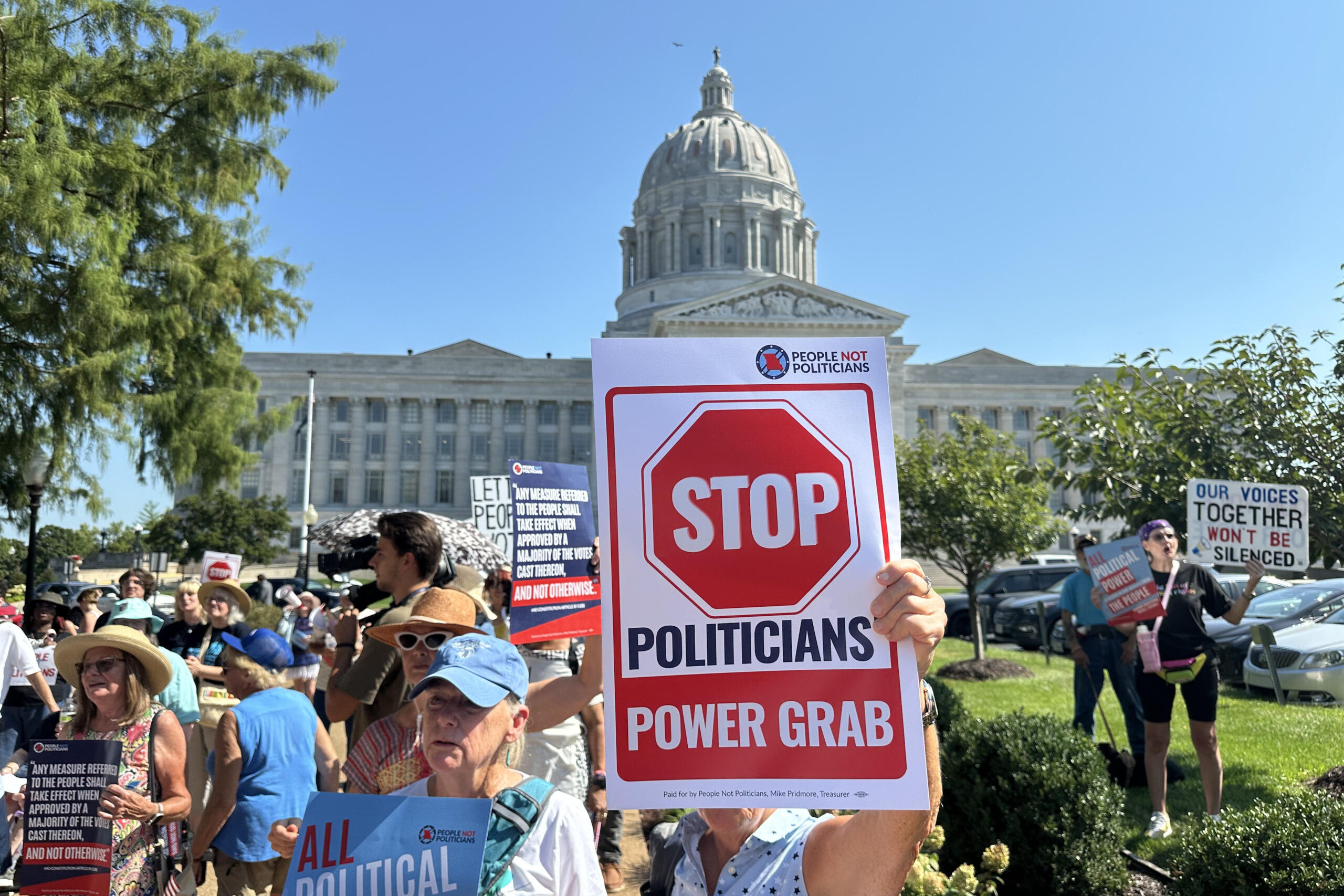
Referendum petition suspended the new map
Opponents gathered hundreds of thousands of signatures seeking a statewide referendum on the redistricting law and submitted them in December 2025.
Hoskins rejected the petition in August 2026, asserting that Missouri’s referendum process could not be used to challenge congressional redistricting. Because the rejection came on the day of the state primary, Missouri conducted that election under the newer districts.
The Missouri Supreme Court subsequently determined that the petition was legal, sufficient and timely. It ruled that the petition suspended House Bill 1 when it was submitted, meaning the new districts never took effect for the general election. The court ordered Hoskins to certify the referendum, place it on the November ballot and continue using the 2022 map unless voters approve the newer one.
Voters will have the final say on Proposition A
People Not Politicians Missouri, the organization sponsoring the referendum, welcomed the federal and state court decisions.
“The law is the law, the Missouri constitution is clear as was the Missouri Supreme Court,” Executive Director Richard von Glahn said. “The courts have settled this, now it’s up to Missouri voters to finish the job and vote NO on Proposition A.”
The November referendum will determine whether the newer congressional boundaries ultimately take effect. Until then, the Missouri Supreme Court’s ruling provides that the districts established in 2022 remain controlling for the 2026 general election.
More on US News