The 10 Senate Seats Most Likely to Flip in 2026 as Democrats Expand Battleground/ TezzBuzz/ WASHINGTON/ J. Mansour/ The Senate battleground is expanding ahead of the 2026 midterms, with Kansas joining CNN’s ranking of the 10 seats most likely to change parties. Democrats are showing strength in several Republican-leaning states as economic frustration and the Iran war weigh on President Donald Trump. Republicans retain a major advertising advantage in most competitive races, while Democrats must gain four GOP-held seats and defend their vulnerable incumbencies to win control.


Quick Look
- Expanded battleground: Kansas enters CNN’s competitive Senate ranking despite not electing a Democratic senator in 94 years.
- Top opportunity: North Carolina remains the seat most likely to flip, with Democrat Roy Cooper leading Republican Michael Whatley.
- Democratic gains: Ohio, Alaska and Texas move higher in the rankings following encouraging polling for Democratic candidates.
- Majority requirement: Democrats need four Republican-held seats while defending three of their own.
- Republican spending: GOP advertisers are positioned to outspend Democrats in eight of the 10 ranked races from early October through Election Day.
- Political environment: Trump’s approval stands at 34% in CNN’s Poll of Polls amid dissatisfaction over the economy and the Iran war.
- Ranking limits: The list reflects current reporting, polling, fundraising and state political conditions; it can change before November.


Rep. Chris Pappas speaks to supporters as he attends a canvass launch rally for his Democratic Senate campaign in Manchester, New Hampshire, on September 6, 2026.
Deep Look
Senate Battleground Expands as Democrats Challenge Republican Territory
Nearly four weeks before Election Day, Democrats are finding opportunities in states that had appeared difficult to contest at the start of the cycle.
CNN has expanded its ranking of Senate seats most likely to flip from nine to 10, adding Kansas. New polling also shows competitive Democratic campaigns in Ohio, Alaska and Texas.
All four states supported Trump by double-digit margins in 2024.
Democrats need to capture four Republican-held seats while retaining three vulnerable seats of their own, including Michigan, to secure a Senate majority.
Trump’s 34% approval rating in CNN’s Poll of Polls reflects a challenging national environment for Republicans. Frustration over economic conditions and the war against Iran has coincided with strong Democratic enthusiasm in special elections and early indications of increased early-voting participation.
Nevertheless, Republicans hold substantial financial advantages. AdImpact data shows they are positioned to outspend Democrats on advertising in eight of the 10 most competitive races from the start of October through Election Day.
That advantage is partly offset by the higher advertising costs faced by Republican-aligned outside groups compared with Democratic candidate campaigns.
1. North Carolina: Cooper Holds Strong Position Against Whatley
North Carolina remains CNN’s most likely Senate seat to change parties.
Former Democratic Gov. Roy Cooper has centered his campaign on affordability as he faces Republican Michael Whatley, the former Republican National Committee chairman and Trump ally seeking to succeed Sen. Thom Tillis.
An Elon University/YouGov poll released last month found Cooper leading Whatley by 11 points among likely voters.
The Republican-aligned Senate Leadership Fund is pausing its advertising campaign in the state. Over the weekend, Republican outside groups removed more than $15 million from their remaining advertising reservations, according to AdImpact.
Trump campaigned alongside Whatley last month, seeking to mobilize supporters in a state he has won three times.
2. Ohio: Brown’s Polling Strength Moves Race Higher
Ohio rises two places in the ranking as former Democratic Sen. Sherrod Brown challenges Republican Sen. Jon Husted.
Brown lost his bid for a fourth term by fewer than four points in 2024 but has led Husted in most recent polls.
A late-September New York Times/Siena University survey found Brown at 49% and Husted at 46% among likely voters, a difference within the poll’s margin of error. A Marist survey of registered voters last month showed Brown ahead by eight points.
The NYT/Siena poll measured Brown’s favorability at 46%, compared with Husted’s 37%. Brown’s longer relationship with Ohio voters may help explain that difference. Husted, a former lieutenant governor, was appointed last year to fill Vice President JD Vance’s Senate seat.
Data centers have become a prominent campaign issue. Brown has called Husted “the face of data centers in Ohio,” while Republicans’ Senate campaign arm has warned that the issue is an “anchor” on Husted’s campaign.
Senate Democrats blocked a Husted-sponsored proposal last week that would have recommended state action on data-center energy costs. Trump defended data centers while campaigning for Husted in southwestern Ohio on Saturday.
Brown also released a digital advertisement featuring voters reacting with profanity to Husted’s earlier suggestion that people living in poverty are “not very experienced at navigating the real world.” An edited version without expletives is airing on television.
Republicans have revived attacks on Brown over transgender policies. Brown answered with an advertisement featuring voters who say Ohio already has laws addressing those matters and want candidates to prioritize other concerns.
Republican groups have allocated more than $80 million for advertising from early October through Election Day, compared with more than $50 million for Democrats.
3. Alaska: Peltola Leads in New Poll as Ranked-Choice Vote Approaches
Alaska moves up two places following a NYT/Siena poll released Saturday showing Democrat Mary Peltola leading Republican Sen. Dan Sullivan 50%–43% among likely voters.
Polling the large, sparsely populated state is difficult, adding uncertainty to assessments of the race.
The election will use ranked-choice voting. Two additional candidates are on the ballot, including another Republican named Dan Sullivan, a former schoolteacher. Republicans have expressed concern that voters could confuse the two candidates.
Democrats regard Peltola, a former congresswoman, as a strong recruit. She has kept some national party figures, including former Vice President Kamala Harris, at a distance while Sullivan attempts to connect her with “lower-48 liberals.”
Sullivan recently appeared with Trump in the Oval Office to promote a $54 billion South Korean investment in the Alaska LNG pipeline project.
Peltola also praised the announcement, saying she looked forward to “continuing this bipartisan work” with Trump.
Her treatment of staff drew scrutiny last month after a New York Times report detailed allegations of hostile behavior from former aides. Her campaign denied a pattern of abuse while acknowledging difficulties following the deaths of her mother and husband in 2023.
Republican Sen. Lisa Murkowski defended Peltola, pointing to those personal losses.
4. Maine: Collins and Jackson Prepare for Four Debates
Maine drops two places, although Republican Sen. Susan Collins and Democrat Troy Jackson remain locked in a highly competitive contest.
A University of New Hampshire poll last month placed Jackson ahead 51%–47% among likely voters, the first public survey to show him leading.
Other recent surveys, including CNN/SSRS and NYT/Siena polling, found no clear leader.
Collins faces a difficult environment in a state Harris won by seven points in 2024. Polling suggests negative views of Collins and Trump are important factors in the race.
Democrats have criticized Collins for supporting Trump on major votes, despite her differences with him over tariffs and the Iran war.
They have also highlighted a ProPublica report alleging that her office participated in a pay-to-play arrangement during her 2020 campaign. Collins strongly denied the allegations, describing the report as a “political hit job.”
Republicans are emphasizing Collins’ record of delivering for Maine while airing advertisements attacking Jackson, a former state Senate president, over corruption allegations and tax policy.
The candidates are scheduled to hold four debates over 10 days beginning Tuesday.
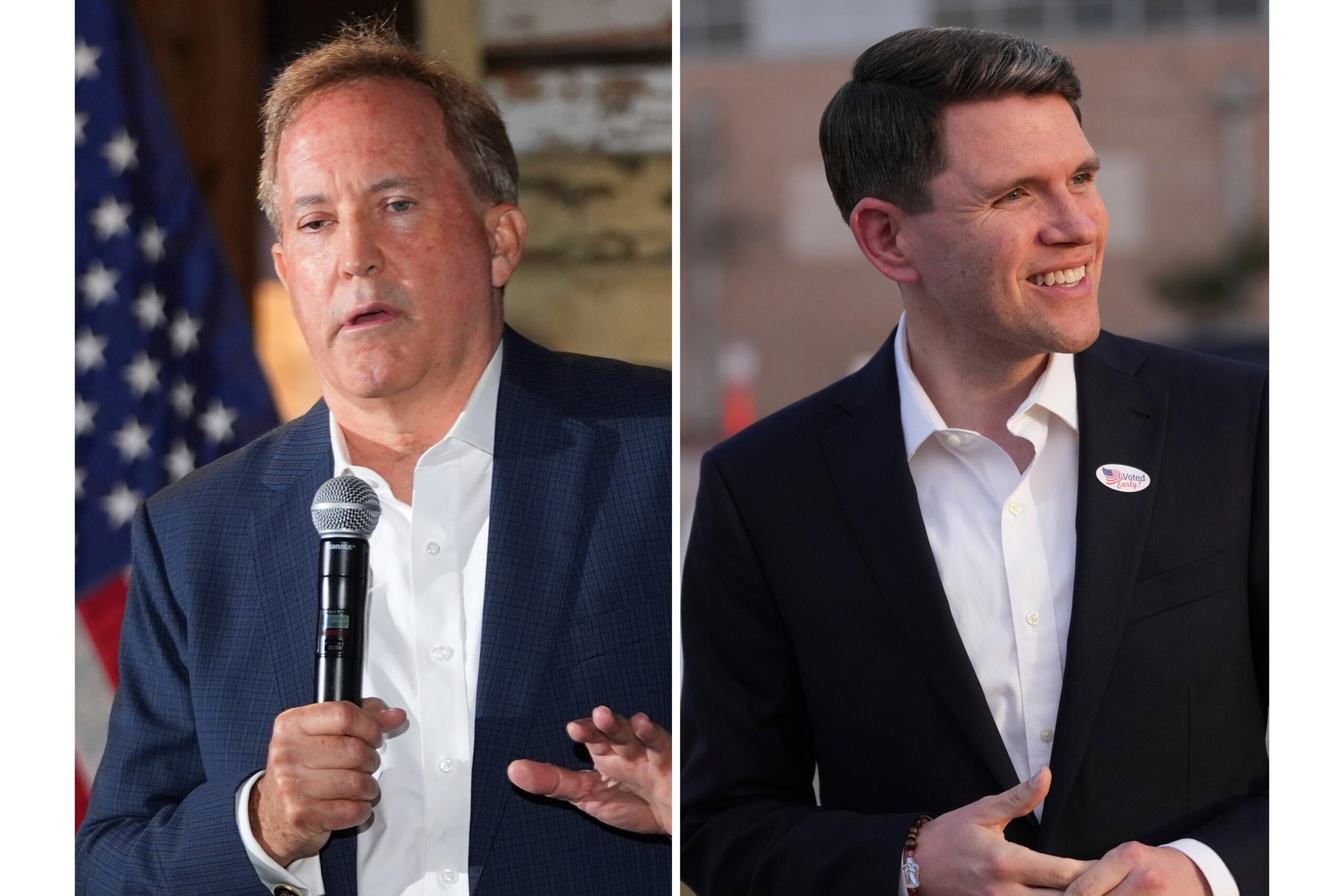
5. Texas: Talarico Challenges Paxton as Republicans Launch Rescue Effort
Texas climbs two places as Democrat James Talarico performs better than expected against Republican Attorney General Ken Paxton.
Democrats see an opening based on Talarico’s appeal, concerns about Paxton’s scandals and a shift toward Democrats among Latino voters.
A NYT/Siena poll conducted during the final nine days of September showed Talarico leading 51%–45% among likely voters.
A Fox News poll released last week found no clear leader, with Talarico at 51% and Paxton at 49%.
Paxton needs strong Republican turnout, including support from voters who backed Cornyn in May.
Trump held an event in Denton on Thursday and plans a San Antonio rally Wednesday, making two visits to Texas within a week.
Republicans hold a nearly eight-to-one advantage in remaining advertising reservations for the final month: approximately $70 million to Democrats’ $9 million.
However, their reliance on outside groups and late advertising bookings means they face higher costs as available inventory tightens.
6. Michigan: El-Sayed and Rogers Compete in Key Democratic Defense
Michigan falls three places but remains one of Republicans’ few opportunities to capture a Democratic-held seat.
Democrat Abdul El-Sayed faces former Republican Rep. Mike Rogers, who lost to Sen. Elissa Slotkin by 0.3 percentage points in 2024.
A Marist poll of registered voters showed El-Sayed leading 51%–44%. September surveys of likely voters, including a Fox News poll released Wednesday, found no clear leader.
Republicans have reserved more than $43 million in October advertising, compared with approximately $25 million for Democrats.
GOP advertisements describe El-Sayed as “dangerous” and “radical.”
“He’s too extreme for Michigan, and your vote can stop him,” says an advertisement from a pro-Rogers group.
Economic frustration presents a challenge for Rogers in a state affected by tariffs and higher gasoline prices linked to the Iran war.
The Fox News poll found that six in 10 likely voters disapprove of Trump, while seven in 10 consider cost-of-living issues extremely important.
It also found that 39% were extremely concerned about Rogers being too closely aligned with Trump, while 36% expressed that level of concern about El-Sayed’s positions being too liberal.
Rogers has called for a swift end to the Iran war after previously praising Trump’s decision to begin it. His campaign seeks to attract independents and dissatisfied Democrats while mobilizing Trump supporters.
El-Sayed recently campaigned with Harris to build support among Black voters. Although some Jewish Democrats remain skeptical of him, he secured the endorsement of Michigan Attorney General Dana Nessel.
The candidates’ first debate is Thursday.
7. Iowa: Turek and Hinson Run Close as Farm Costs Rise
Iowa moves up one position, with Democrat Josh Turek and Republican Rep. Ashley Hinson running closely in two recent surveys.
A NYT/Siena poll placed Hinson at 48% and Turek at 47% among likely voters. Fox News found Turek at 49% and Hinson at 47%.
Tariffs and the Iran war have increased costs for farm equipment, fertilizer and diesel in the agriculture-dependent state.
Trump’s approval stood at 42% in the Fox News survey. More respondents expressed concern about Hinson being too closely aligned with Trump, at 52%, than about Turek being too liberal, at 43%.
Turek has linked Hinson to the president and aired an advertisement connecting her votes with high gasoline prices.
Democrats also hope competitive House races and state auditor Rob Sand’s gubernatorial campaign could strengthen turnout across the ticket.
Hinson has called for an immediate end to the Iran war and criticized Trump’s approach to beef imports.
She appeared with Trump as he announced a proposed $15 billion steel plant that could create 1,750 permanent jobs and thousands of temporary positions. The promise has drawn skepticism from Iowans in both parties.
The Senate Leadership Fund added $20 million to its October advertising plans, reinforcing Republicans’ spending advantage in the closing weeks.
8. New Hampshire: Pappas Faces Familiar Republican Name
New Hampshire drops two places as Democratic Rep. Chris Pappas competes against former Republican Sen. John Sununu.
A September University of New Hampshire survey showed Pappas leading by eight points among likely voters. A NYT/Siena poll conducted around the same period found no clear leader.
Democrats expect their supporters and independents to favor Pappas in a state Harris narrowly carried in 2024. However, Pappas has urged the party to devote more attention to the contest.
Sununu benefits from a well-known family name: both his father and brother served as governor.
Democrats are emphasizing which Sununu is running and criticizing his lobbying background.
Republican strategists hope Gov. Kelly Ayotte’s strength in her reelection campaign will help Sununu. New Hampshire’s tradition of ticket splitting and the challenging national Republican environment make that uncertain.
9. Kansas: Hamilton Puts Longtime Republican Seat in Play
Kansas joins the ranking for the first time as Democrat Adam Hamilton challenges Republican Sen. Roger Marshall.
Hamilton, a megachurch pastor who changed parties, has made the race competitive in a state that has not elected a Democratic senator in 94 years.
A NYT/Siena poll found the candidates tied among likely voters.
Marshall won by double digits in 2020, and Trump carried Kansas by 16 points in 2024. The Senate Leadership Fund now plans to spend millions defending the seat.
Marshall, an OB-GYN, faces criticism following reporting about his involvement in medical-debt lawsuits.
During a debate last month, he called the reporting a “hit job” and described his actions as “common business practices.”
Tariffs and fuel costs are also affecting Kansas farmers. Marshall has taken some distance from the administration, criticizing ICE last month for “mass disruptions to local communities and businesses.”
Hamilton is highlighting his party switch and separating himself from Washington’s “dysfunction.”
“We have to fix our broken politics by meeting in the middle,” he says in a campaign advertisement. “It’s time for something different.”
Former Republican Gov. Mike Hayden recently became the second former GOP governor of Kansas to endorse Hamilton.
“I supported Roger Marshall before. But he has spent his time in the Senate putting party and politics over the people of Kansas,” Hayden wrote in an opinion piece. “It’s time for a change.”
10. Georgia: Ossoff Holds Fundraising and Advertising Advantages
Democratic Sen. Jon Ossoff appears well positioned against Republican Rep. Mike Collins.
Federal Election Commission records show that Ossoff’s principal campaign committee had raised $77 million through June, compared with Collins’ $6.5 million.
Georgia is the only ranked race where Democrats are positioned to hold a substantial advertising advantage in the final month, with approximately $23 million reserved against Republicans’ $16 million.
Republicans appear cautious about investing heavily in the contest, unlike their approach in Ohio.
Both parties are watching the governor’s race for potential effects on Senate turnout. Republicans hope Rick Jackson can help Collins, while Ossoff is campaigning to support Democrats across the state, including gubernatorial nominee Keisha Lance Bottoms.
Additional Senate Races Remain on the Watch List
Several other contests remain outside the top 10 but could draw attention before November.
In Nebraska, independent Dan Osborn faces Republican Sen. Pete Ricketts after unsuccessfully running for the Senate in 2024. Economic pressure from the Iran war provides a backdrop, although Osborn still faces a difficult path.
South Carolina Republican Sen. Darline Graham is seeking a full term against Democratic pediatrician Annie Andrews after being appointed to the seat held by her late brother, Sen. Lindsey Graham. Late Republican spending will be worth watching in a state that has not elected a Democratic senator in nearly three decades.
In Mississippi, Democrat Scott Colom has attracted attention in his challenge to Republican Sen. Cindy Hyde-Smith. A Democratic victory remains a long shot in a state Trump won by nearly 23 points.
Minnesota Democratic Lt. Gov. Peggy Flanagan faces former sports broadcaster and conservative activist Michele Tafoya. Republicans see promise in Tafoya’s candidacy, but Harris carried Minnesota by four points in 2024, and the state faces the same political headwinds affecting other Midwestern Republican campaigns.
More on US News