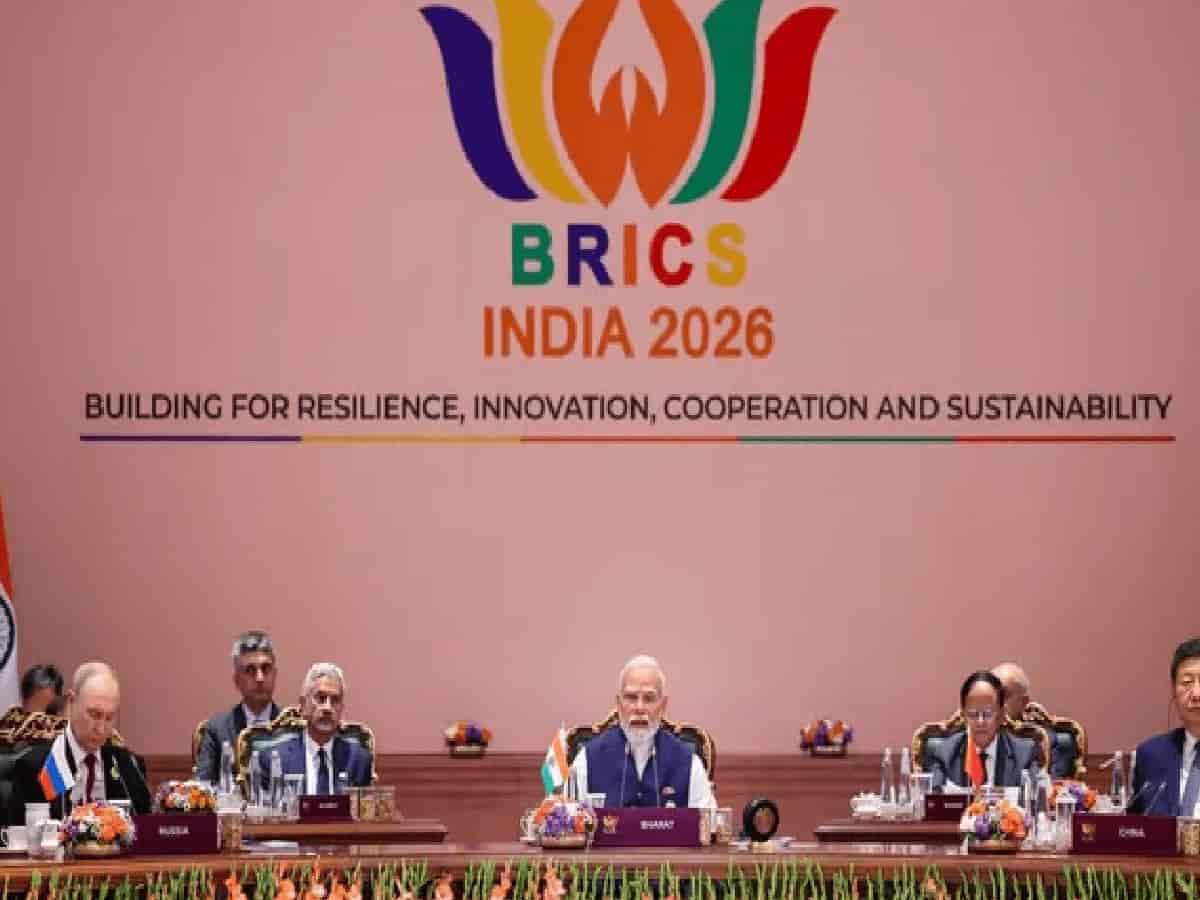
The 18th BRICS Summit 2026, held in New Delhi, the capital of India, concluded with a historic diplomatic success in the shadow of the ongoing serious geopolitical turmoil at the global level, the Russia-Ukraine military standoff that has dragged on for the fourth year, the dire crisis in West Asia spanning from the Red Sea to the Gulf region, and the aggressive tariff policies of the Trump administration in Washington. The biggest and historic achievement of the conference was the adoption of the 'New Delhi Declaration' with full consent by all the member countries. Before the conference, analysts of international politics were speculating that it would be impossible to pass any joint resolution due to internal contradictions among China, Russia, India, Brazil, South Africa, Iran and Gulf countries, but the efficient conduct of Indian diplomacy put a complete stop to all these apprehensions. The pyramid of privileges must be transformed into a platform of partnership: PM Modi's global message Addressing the inaugural and plenary session of the summit, Prime Minister Narendra Modi strongly attacked the fundamental inconsistencies of the existing international order. He termed the current structure of the UN Security Council and Western-dominated financial institutions as a 'pyramid of privileges', where a select few powerful countries decide the future of the rest of the world based on their narrow interests. The Prime Minister called in clear words that now is the time to demolish this unbalanced pyramid and create a 'platform of partnership' based on equality and mutual respect. India's vision is not limited to just economic development, but to ensure that human welfare, sustainable development and fair representation are at the center of international decision-making. New Delhi's forum gave a completely opposite and powerful message despite US President Donald Trump's continuous rejection of the BRICS block, calling it ineffective and open warnings of imposing punitive customs duties on the member states. The member countries made it clear that the world is no longer going to work under unipolar pressure. The New Delhi Declaration gave top priority to multilateralism, multipolar global order, supremacy of international law and respect for national sovereignty. This manifesto is strong evidence that global supply chains cannot be held hostage through trade restrictions and tariff walls, but that dialogue and a rules-based system are the only basis for economic stability. BRICS has become the most reliable platform of the Global South, diversity has become its biggest strength. During the conference, it became completely clear that BRICS is no longer just an annual tea-breakfast meeting of some developing economies, but it has become the most elevated and organized platform of the 'Global South' countries of Asia, Africa and Latin America. Prime Minister Modi underlined that the unwavering confidence of developing and underdeveloped countries in BRICS is continuously increasing because here their priorities, concerns and development needs are heard without any geopolitical condition. Instead of seeing the ideological and geographical diversity present within the block as a weakness, India proved it to be the biggest strength of BRICS and an engine of collective consensus. Putin's clear message to Europe and the historic direct talks between Iran and UAE, this diplomatic platform of New Delhi also proved to be very effective in building a bridge of dialogue in complex international conflicts. During the conference, Russian President Vladimir Putin gave a strong and clear message to European countries, saying that Russia poses no threat to the security of the European continent, provided their legitimate security concerns are respected. Putin made Russia's position clear to the international community on the current situation of the Ukraine war. Along with this, the direct face-to-face meeting held between the top leadership of Iran and the United Arab Emirates parallel to the conference is being considered an extraordinary achievement of diplomacy. The decades-old disputes in West Asia may not be resolved overnight, but the two regional powers sitting at the same table and talking shows that diplomatic channels are always open.