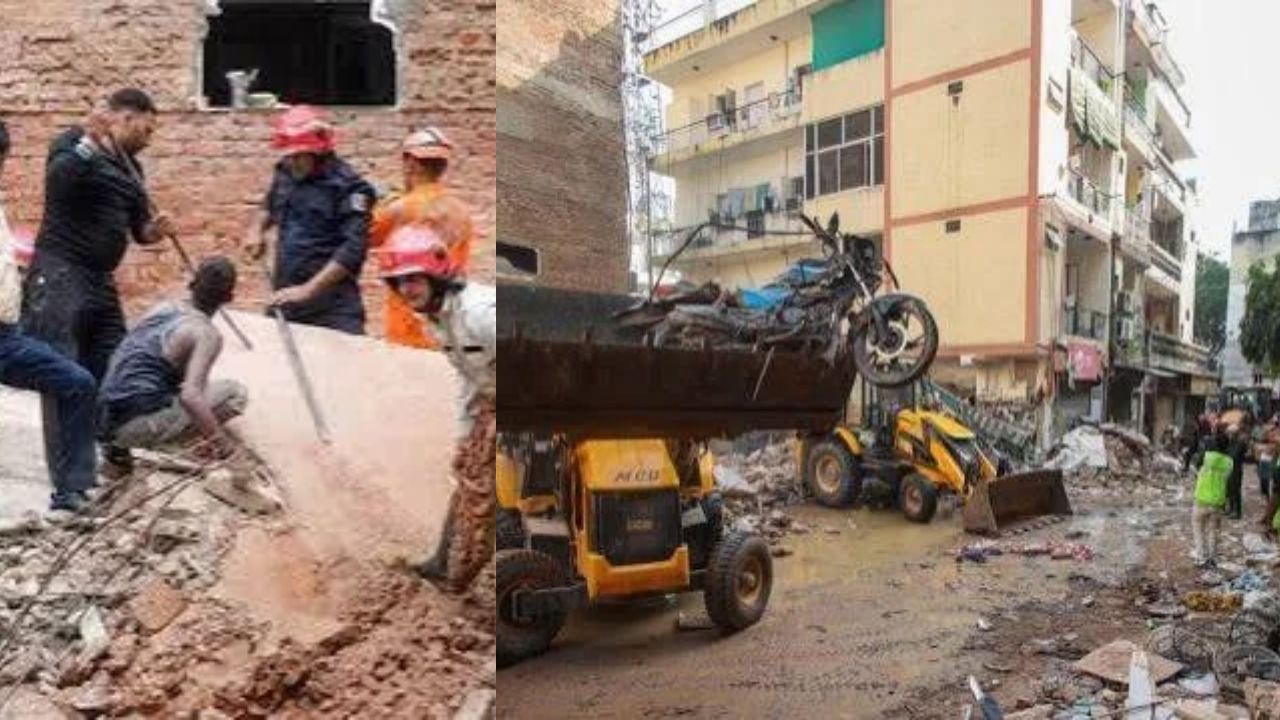
New Delhi: The Satya Niketan building collapse has once again brought Delhi's growing illegal construction crisis into focus. After the tragedy, the Delhi government announced strict action against unauthorized fifth floors and unsafe structures, but implementing a city-wide crackdown may prove extremely difficult due to decades-old laws, regularization schemes and legal protections.
The issue is not limited to a few buildings. Across Delhi, thousands of properties have added extra floors beyond approved limits, creating concerns over structural safety, overcrowding and pressure on civic infrastructure.
Experts believe that while demolition and sealing action may appear to be the immediate solution, the reality on the ground is far more complicated because several policies introduced over the years have protected many unauthorized structures from direct action.
How Delhi's Illegal Construction Problem Expanded
Delhi's battle with illegal construction dates back nearly two decades. In February 2006, the Municipal Corporation of Delhi launched a massive sealing drive after court directions against unauthorized buildings and commercial violations. The scale of illegal construction was so widespread that Parliament introduced the Delhi Laws (Special Provisions) Act, 2006 to provide temporary protection to several structures facing sealing action.
The law, initially introduced for a limited period, continued to receive extensions over the years. The latest extension under the National Capital Territory of Delhi Laws (Special Provisions) Second Amendment Act, 2023 provides protection to several unauthorized structures until December 31, 2026. This legal framework has become one of the biggest challenges for authorities planning strict action against illegal floors.
Thousands of Buildings May Come Under Scanner
Municipal officials say illegal additional floors are present across multiple areas, including urban villages, old residential settlements, resettlement colonies, Trans-Yamuna areas and parts of Old Delhi. In many unauthorized colonies, buildings have expanded vertically with five, six, seven and even eight floors despite restrictions under building regulations.
According to Delhi building norms, most residential properties are allowed ground plus three floors, with a height limit of around 15 metres. Properties with stilt parking may get permission for an additional floor under certain conditions. However, officials say these rules are frequently violated, with stilt parking spaces often converted into residential rooms, shops or commercial areas.
Regularization Policy Creates Fresh Challenge
The recent regularization of 1,511 unauthorized colonies has added another layer of complexity for enforcement agencies. The colonies were regularized under an “as-is-where-is” approach, covering around 45 lakh residents. Officials believe many existing constructions inside these areas may receive protection, making immediate demolition or sealing action against old illegal floors difficult.
Urban planners argue that regularization has often been used as a temporary solution to manage Delhi's illegal construction problem instead of addressing the root causes.
Housing Shortage Behind Illegal Growth
Experts believe illegal construction has continued because of Delhi's shortage of affordable housing and increasing demand for residential spaces near employment hubs.
For many residents, additional floors became a way to accommodate growing families or generate rental income. However, uncontrolled vertical expansion has also increased risks related to building strength, fire safety, parking and basic infrastructure.
Urban planning experts say governments have struggled to take strict action because a large number of residents are connected with these properties.
Punishment Rules Also Changed
Another concern raised by experts is the removal of stricter punishment provisions related to illegal construction. Earlier, Section 466A allowed imprisonment of up to six months and financial penalties for illegal construction activities. The provision was removed under changes linked with the government's Ease of Doing Business initiative through the Jan Vishwas Bill.
Former officials believe reducing penalties could weaken the deterrence against builders and individuals involved in unauthorized construction.
Experts Demand Permanent Solution
Experts say demolition alone cannot solve Delhi's construction crisis. Several committees in the past have recommended stronger monitoring systems and better enforcement mechanisms.
Former DDA commissioner AK Jain suggested creating an independent building regulatory authority similar to RERA to monitor construction activity, ensure accountability and prevent violations.
According to planners, Delhi needs a long-term urban strategy involving affordable housing, strict enforcement, transparent approvals and stronger safety checks.
After the Satya Niketan collapse, authorities are expected to increase inspections of unsafe buildings and review illegal construction cases. However, the biggest challenge will be balancing public safety with existing legal protections and regularization policies. The tragedy has once again raised a critical question for Delhi: Can the city control illegal construction before another disaster happens?